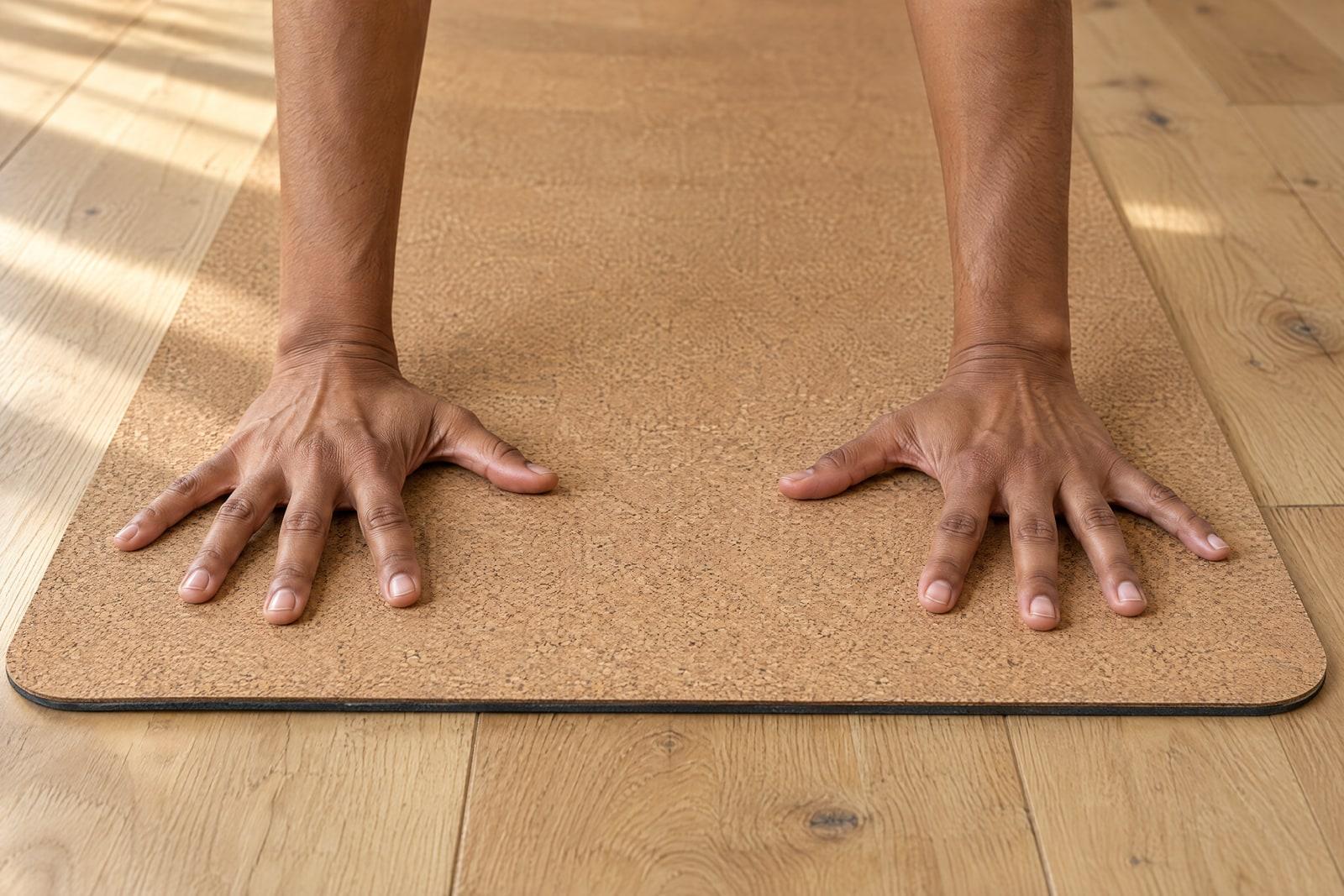
The cork yoga mat that brings the forest floor to your practice.
Cork on natural tree rubber, a mister for dry starts, and 60 days to try it in your own class.
From $149
Free standard shipping, and a free return label within the trial, even after you've used it.
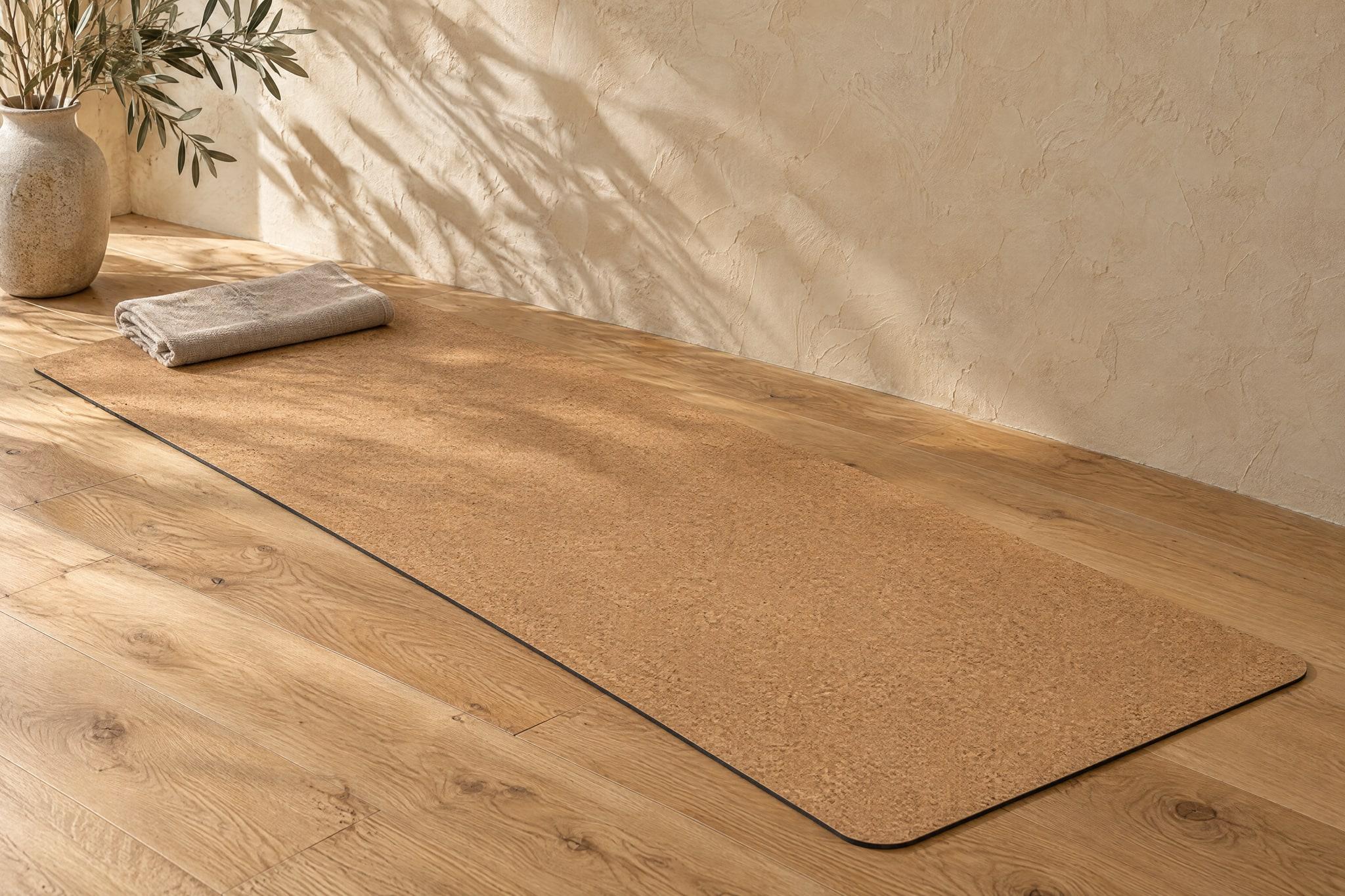
Where mat problems start
You can't tell what's under the cork, or why the mat smells.
You slide in downward dog. The towel you add bunches up.
Cork mats sound heavy to carry, and you've heard they flake.
“The cork top is what matters.”
You touch the cork, so it's what gets sold.
Slick hands are a surface question. We answer it on the mat's page, without a grip promise. Shifting on the floor, weight and a smell nobody explains usually start in the base. Cork can flake when it's thin or the bond is weak. Better-looking cork fixes none of them.
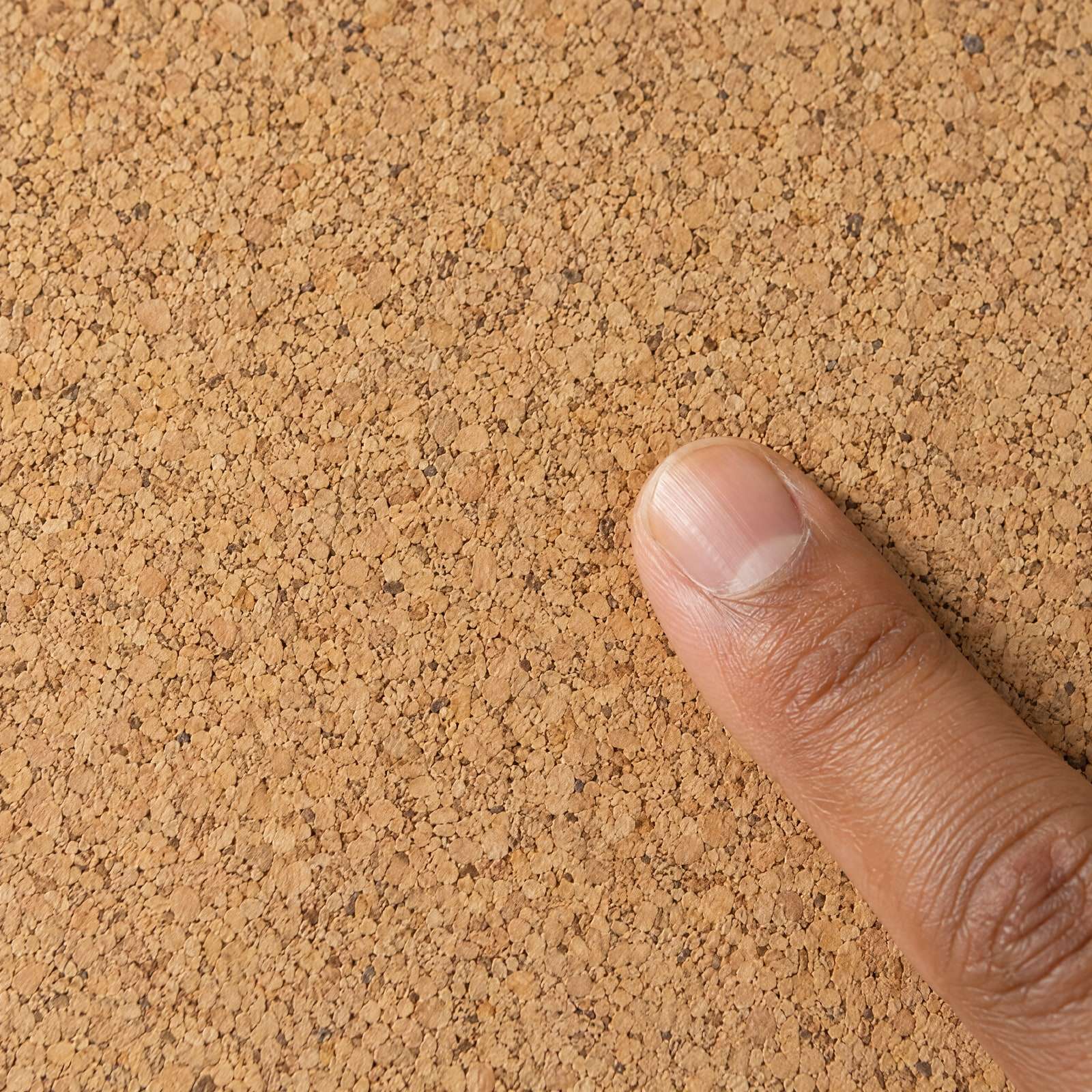
We call it cork-washing
Cork-washing: selling a thin cork veneer as an eco costume. The cork sits over a base nobody names, held by a glue nobody mentions, sold on adjectives nobody tested.
We don't name brands. If a cork mat let you down, blame the listing.
To spot it, ask what's under the cork, how thick it is and what the warranty covers.
We looked under the cork
We wanted the feel of cork under bare hands.
Listing after listing named the cork and said little about the base or the glue.
The base sets most of a mat's weight. The bond keeps the cork on. Together they decide if a mat comes to class.
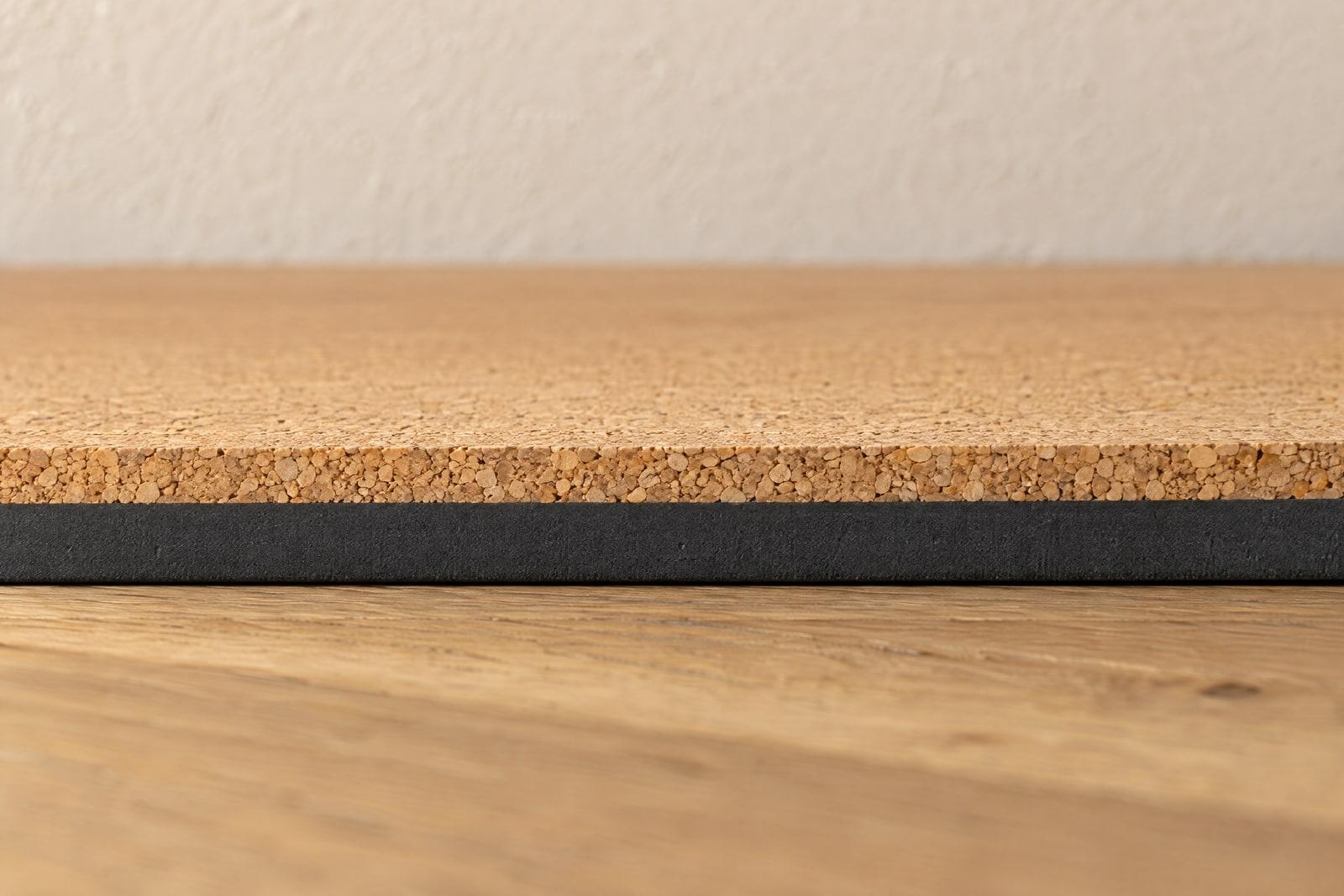
A cork mat is only as good as its bond and its backing.
- Cork about 2 mm, fine-grain agglomerated
- Bond (adhesive) holds cork to rubber; chemistry to be published before launch
- Natural tree rubber about 3 mm, open-cell, charcoal
So we built ours from the layers up. We name each one, publish the targets now and the measurements before launch.
See the testing logFrom $149
Three ways to start
Every set has the same mat, glass mister and care card.
In every set
- The mat (targets)
- 183 × 66 cm (72 × 26 in), 5 mm, 2.0 kg (4.4 lb)
- Trial
- 60 days from delivery, free return label
- Shipping
- Standard is free in the contiguous US
- Warranty
- 2-year limited bond warranty
The Mat
$149
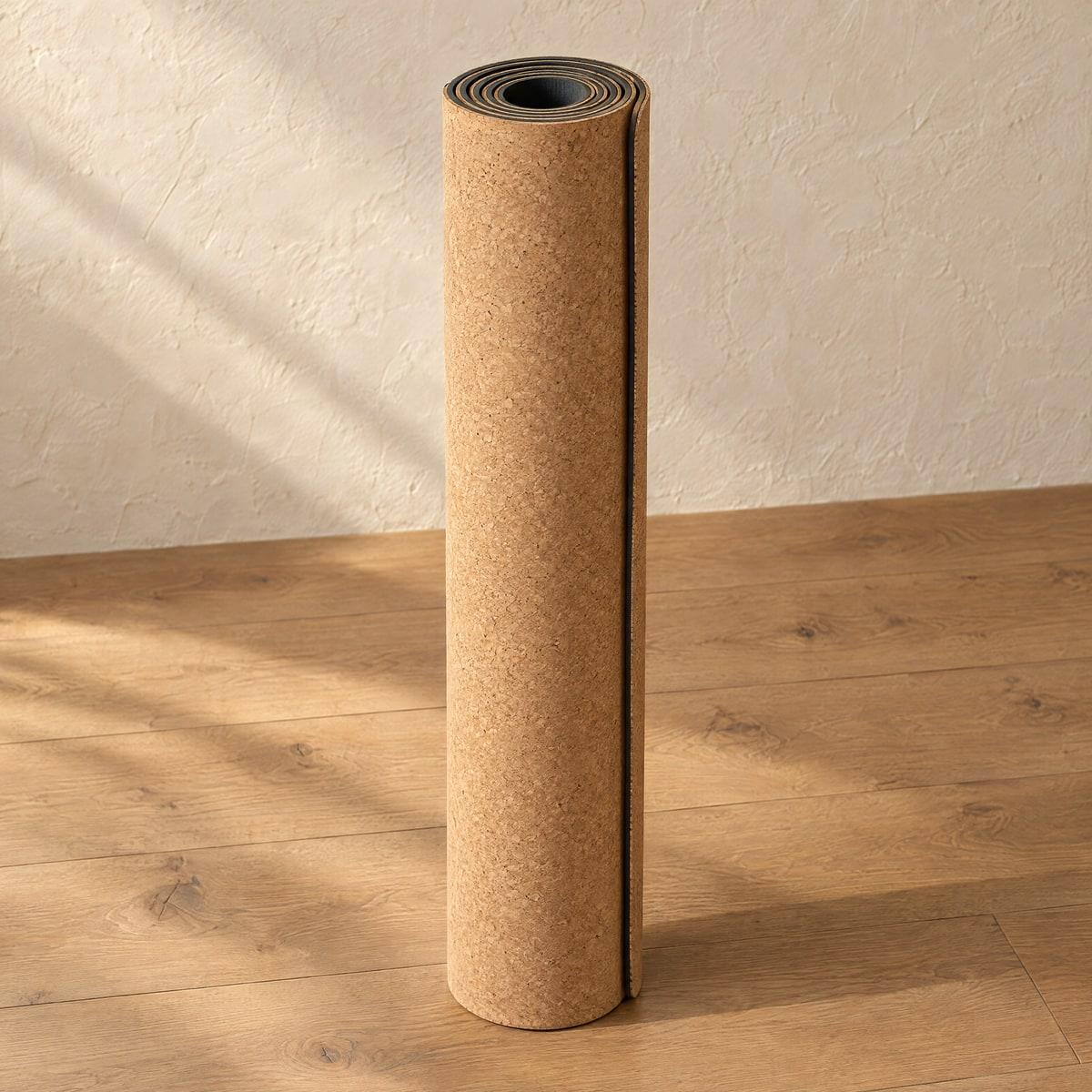
For one practitioner, at home or in class.
In the set: The mat, its mister and care card.
Choose the MatThe Practice Set
Our pick
$199
Save $28
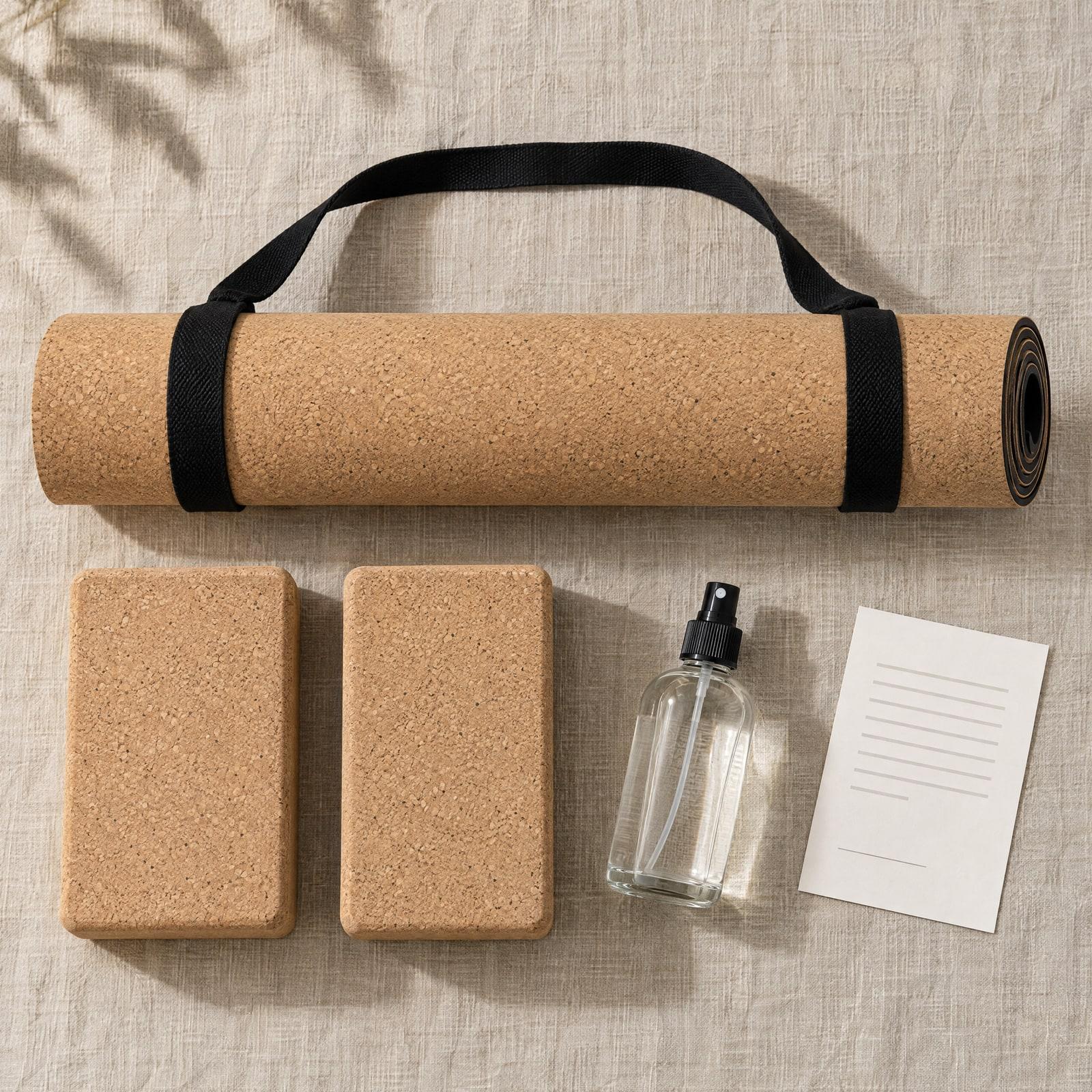
For carrying your mat to class, with blocks.
In the set: Mat, carry sling and two cork blocks.
Choose the Practice SetThe Pair
$299
Save $57
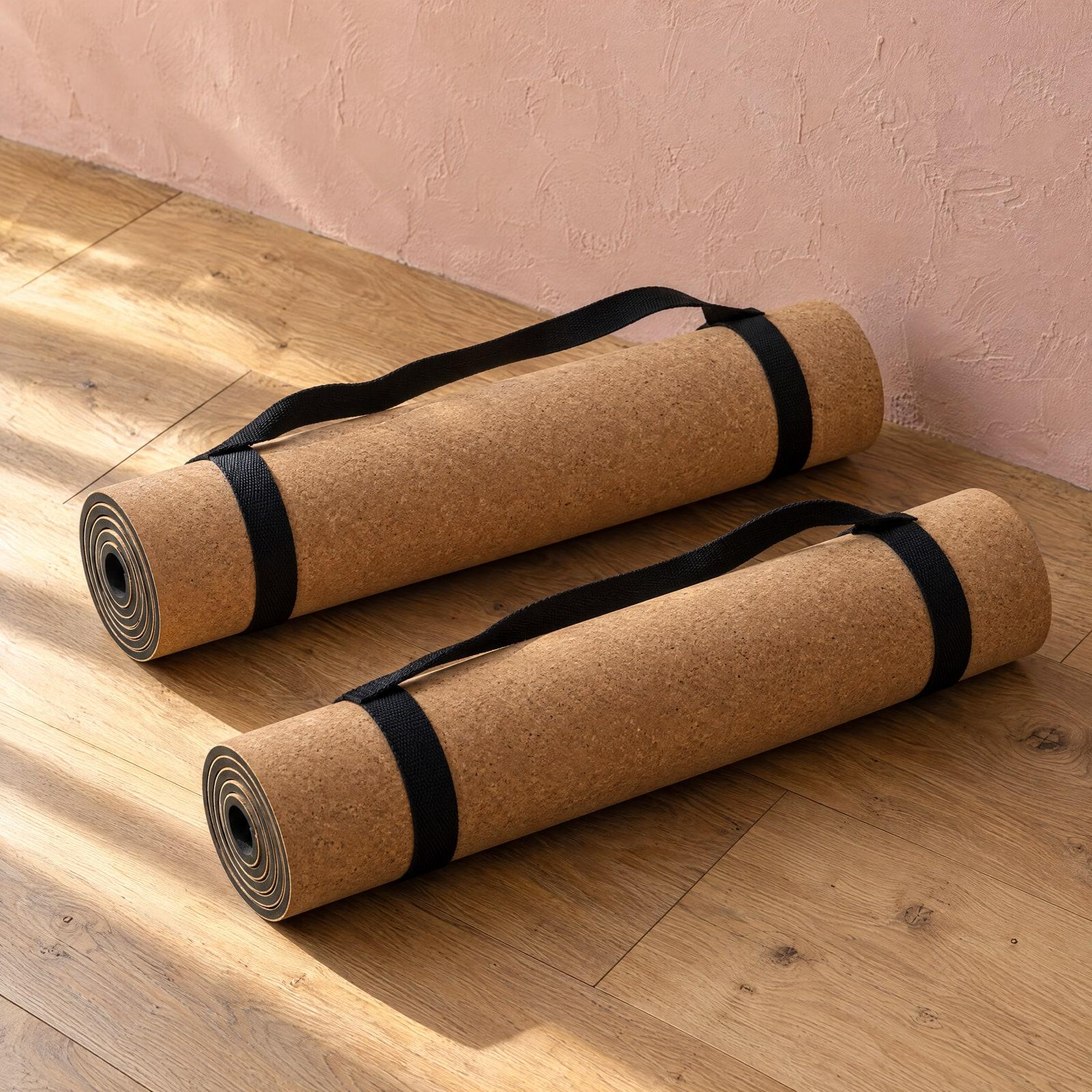
For home and studio, a partner, or a gift.
In the set: Two mats and two carry slings.
Choose the Pair
Things we don't claim
We state what we can document, and we label everything else a pre‑production target.
Not tested or measured
“Non-slip”
We don't call this mat non-slip. We haven't tested its grip on hands or floors.
“Hot-yoga mat”
We don't call it a hot-yoga mat, because we haven't tested it in heated rooms.
“Ultralight”
We don't call it ultralight. The target is 2.0 kg (4.4 lb), so you can judge.
“Built to last”
We don't promise a lifespan. Our limited warranty covers the bond and manufacturing defects. It doesn't cover surface wear.
Not documented yet
“Made in Portugal”
We don't say Made in Portugal or Portuguese cork. We'll say where the cork comes from and where the mat is made once we hold the documents.
Not true, or too vague
“Latex-free”
We don't call it latex-free, because it isn't. If you have a latex allergy, this mat isn't for you.
Six more words we leave off
Not tested or measured
“Antibacterial”
We don't call this mat antibacterial or antimicrobial. We haven't tested it for either.
“Carbon neutral”
We haven't measured this mat's carbon footprint, so we don't make carbon claims about it.
Not documented yet
“PVC-free”
We don't print PVC-free. We need the full materials list first, glue included.
Not true, or too vague
“Odorless”
We don't call it odorless. New natural rubber has a mild smell that fades.
“Recyclable”
We don't call it recyclable or biodegradable. This mat can't go in household recycling.
“Eco-friendly”
We don't call this mat eco-friendly or sustainable. We name every layer instead.
Grip, weight and smell are yours to judge. The mat's page lists every target and each test's status.
See the mat and the setsAbout cork
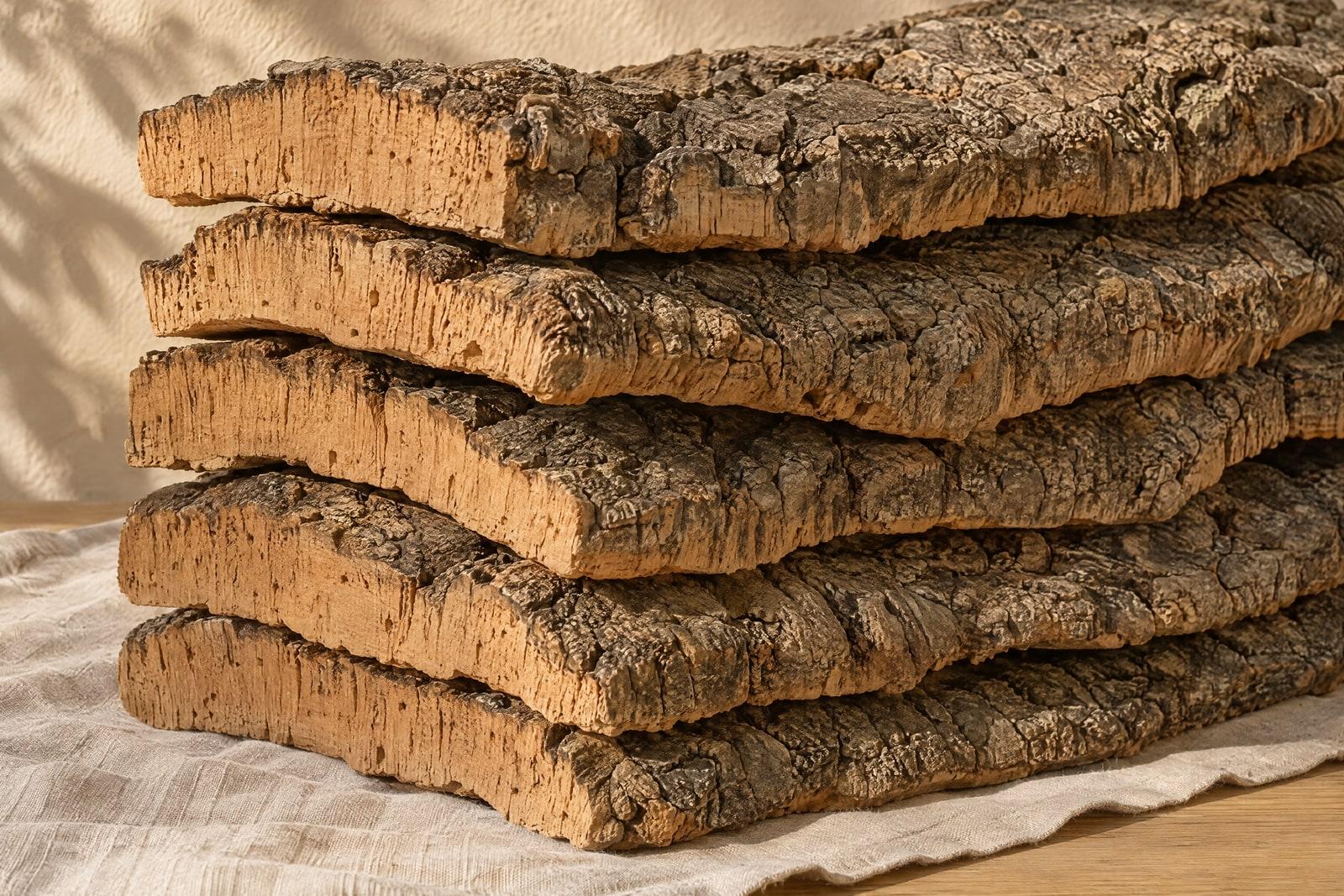
Our top layer starts as bark. These facts cover cork in general, not where ours comes from.
Cork is the bark of the cork oak. Harvesting it doesn't require cutting down the tree, and the bark grows back.
Cork bark is stripped by hand from living trees.
A cork oak is first harvested at around 25 years old. In Portugal, the law requires at least nine years between harvests.
A cork oak can live around 200 years and be harvested a dozen or more times.
Cork is naturally rich in suberin, a waxy substance that helps it resist water.
Portugal has about a third of the world's cork oak woodland and produces about half of the world's cork.
Source: APCOR, Portugal's cork industry association
Try it on your own floor.
Practice on it for 60 days. Keep it, or send it back on our free return label.